Hardwood & Laminate Flooring
Use as protection between furniture and the floor. Do not apply to dusty, damp, oiled, or heavily soiled surfaces.
 Well-suited





Select the appropriate thickness for your application right away. On the product page, you can then choose the width, color, and length.


Self-adhesive felt tape on a roll
Self-adhesive felt tape can be quickly cut to size, applied neatly, and used in a variety of ways—to protect surfaces, cushion contact points, and reduce unwanted noise.
The right option depends on whether the felt tape is intended to cushion, protect, dampen noise, or cover a larger area. Use this guide to help you quickly find the right thickness and width.
For doors, drawers, cabinets, window frames, and hinges that need to close more quietly or vibrate less.
For chair legs, table legs, cabinets, shelves, and contact surfaces to protect hardwood, laminate, vinyl, or tile floors.
For light sealing, abrasion protection, and cushioning on narrow contact surfaces, edges, frames, and profiles.
For custom cuts, workshop applications, interior finishing, equipment, profiles, or surfaces where the width and thickness vary depending on the project.
Note: Adhesion may be reduced on dusty, greasy, damp, or highly textured surfaces. Clean the surface thoroughly before applying the sticker, and test the sticker on sensitive surfaces in an inconspicuous area.
Self-adhesive felt tape is suitable for many contact surfaces where surfaces need to be protected, noise needs to be reduced, or components need to be neatly separated from one another.

For door grooves, window frames, flaps, and stops: Felt tape cushions contact surfaces, reduces rattling, and can be used as a lightweight sealing felt.
Find the Right Thickness
For tables, cabinets, shelves, and larger surfaces: Felt tape protects hardwood, laminate, vinyl, and tile floors from scratches, scuffs, and indentations.
Find the Right Thickness
For slatted bases, bed frames, and wood-on-wood contact points: Felt strips separate points of contact that rub against each other and help prevent creaking, rattling, and other annoying noises.
Find the Right Thickness
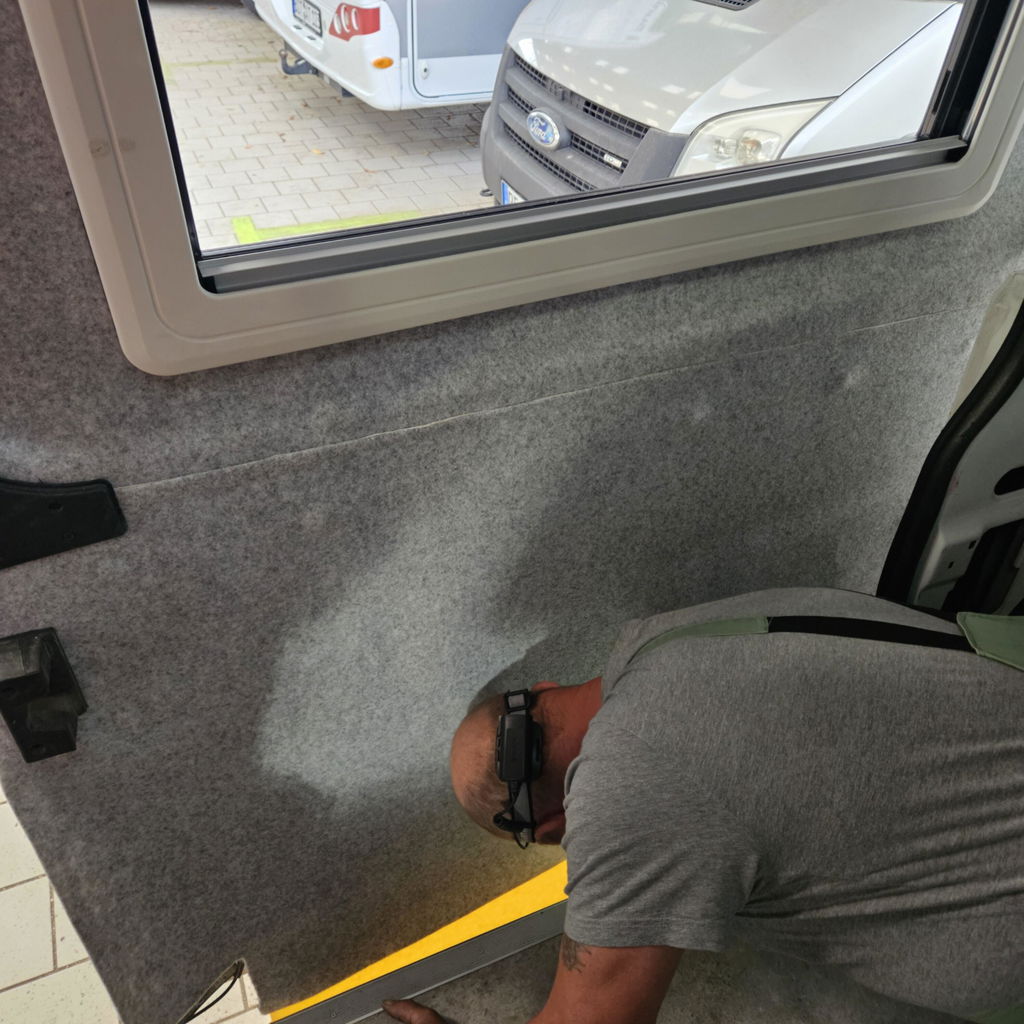
For trim, storage compartments, fixtures, and contact points in the vehicle: Felt tape reduces rattling, squeaking, and vibrations in the interior.
Find the Right Thickness
For equipment, machines, fixtures, and technical components: Felt tape serves as a cushion, spacer, friction guard, or noise dampener on high-stress contact surfaces.
Find the Right Thickness
For shipping, storage, and product protection: Felt strips cushion delicate parts, prevent chafing, and protect painted, smooth, or delicate surfaces.
Find the Right Thickness
For vases, glasses, decorative items, speakers, and small appliances: Felt tape protects delicate surfaces, prevents scuff marks, and can make objects less slippery.
Find the Right Thickness
For profiles, edges, small components, and custom solutions: Felt tape is easy to cut to size and is ideal for individual projects in workshops, crafts, and model making.
Find the Right ThicknessThinner felt strips are often sufficient for delicate applications, window frames, and light cushioning. For furniture, slatted bases, vehicle interiors, or contact surfaces subject to heavier use, a thicker version is usually recommended. The key factors to consider are the substrate, the load, the bonding surface, and the desired protective or cushioning effect.
Self-adhesive felt tape adheres best to clean, dry, smooth, and grease-free surfaces. The rougher, dustier, or more textured the surface is, the weaker the adhesive strength may be.
Use as protection between furniture and the floor. Do not apply to dusty, damp, oiled, or heavily soiled surfaces.
Well-suited
For furniture, doors, and cabinets. Clean the surface first. For oiled or waxed wood, test on an inconspicuous area first.
 Well-suited
For profiles, frames, and equipment. Remove grease, oil, and dust; felt tape usually adheres particularly well to smooth metal surfaces.
 Well-suited
For profiles, frames, and components. Adhesion may vary depending on the type of plastic, especially on very smooth surfaces.
 Well-suited
For display cases and windows. Clean the glass thoroughly and dry it; avoid leaving fingerprints on the adhesive surface.
 Well-suited
With untreated wood or textured surfaces, the bonding area has less contact. The rougher the surface, the more important it is to test it.
 Limited
Self-adhesive felt tape generally does not adhere as well to textile, fibrous, or very flexible surfaces.
 Unsuitable
Moisture, UV radiation, and temperature fluctuations can put greater strain on adhesives and felt. For indoor use, self-adhesive felt tape is usually a better choice.
 Limited
Clean the surface thoroughly, remove grease, oil, wax, and dust, and press the felt strip evenly into place immediately after applying it. Always test on delicate surfaces first.
The surface is the most important factor for good adhesion. The surface should be clean, dry, dust-free, and free of grease. After that, the felt tape can be easily cut to size, peeled off, and applied.

Self-adhesive felt strips are especially handy when you need to quickly protect or cushion edges, contact surfaces, furniture, or stops. Cut the strip to the appropriate length and apply it directly to the prepared surface.
Choose the Right Felt Ribbon
Remove dust, grease, moisture, and loose debris. The surface should be clean, dry, and as smooth as possible.

Place the felt ribbon where you want it and cut it to the desired length with scissors or a utility knife.

Peel off the protective film piece by piece, and try to touch the adhesive surface as little as possible.

Apply the felt tape in a straight line and press it down firmly and evenly. Avoid subjecting it to heavy direct stress immediately after applying it.
The most important answers if you're still unsure about the thickness, width, adhesion, processing, or application of self-adhesive felt tapes.
A thickness of 1–1.5 mm is suitable for delicate edge protection and applications where a low-profile finish is desired. 2 mm is a good intermediate thickness for light cushioning. 3 mm is particularly versatile for furniture, floors, and contact surfaces. 4 mm is suitable when more padding or stronger cushioning is needed.
The width should match the contact surface. Narrow widths such as 5 mm, 10 mm, or 15 mm are suitable for frames, edges, and narrow stops. Wider options such as 20 mm, 30 mm, 40 mm, or 50 mm are ideal for larger contact surfaces, furniture, or floor protection.
Felt tape adheres best to clean, dry, smooth, and grease-free surfaces. Painted wood, metal, and glass are usually suitable. For plastic, oiled wood, or rough or textured surfaces, you should test the adhesion beforehand on an inconspicuous area.
Yes. Self-adhesive felt tape can be cut to the desired length with scissors or a utility knife. This makes it versatile for use on furniture, doors, windows, drawers, frames, edges, or DIY projects.
Yes, self-adhesive felt tape can be used as protection between furniture and the floor or on contact surfaces. For floor protection and heavier loads, wider and thicker versions are usually recommended, such as 3 mm or 4 mm.
Yes. Felt tape is often used on doors, windows, drawers, and frames to prevent slamming, reduce friction, or provide light cushioning. It is important that the chosen thickness leaves enough space and does not interfere with the function of the door, window, or drawer.
Self-adhesive felt tape is primarily suitable for indoor use. Moisture, UV radiation, dirt, and temperature fluctuations can put greater strain on the felt and adhesive. Therefore, its use outdoors should be carefully evaluated beforehand.
No, we cannot guarantee that it will come off without leaving any residue. Self-adhesive felt tape is designed for permanent attachment. When removed, adhesive residue or marks may remain on the surface, especially on delicate, painted, or oiled surfaces.
Clean the surface thoroughly and let it dry completely. Cut the felt tape to the appropriate length, peel off the protective film, and press the tape down firmly and evenly. Avoid touching the adhesive surface as much as possible.
The felt strips are available in various colors, thicknesses, and widths. Depending on the application, you can choose from thicknesses of 1–1.5 mm, 2 mm, 3 mm, and 4 mm, as well as widths ranging from 5 mm to 50 mm.
First, select the thickness based on the application, and then choose the appropriate width based on the contact surface. The narrower the contact area, the narrower the strip should be. The greater the load, the wider and thicker the felt strip should be.
Thin felt strips for doors, drawers, cabinets, window frames, stops, and narrow contact surfaces.
A more subtle intermediate thickness for edges, profiles, frames, contact surfaces, and applications requiring slightly more cushioning.
The versatile standard for furniture, floors, large contact surfaces, scratch protection, and noticeable cushioning.
For added cushioning, larger contact surfaces, abrasion protection, and applications where protection is more important than a low profile.
Now that you know what matters when it comes to thickness, width, surface, and installation, choose the right felt tape option for your furniture, doors, windows, drawers, floors, or your custom project.
Still unsure about thickness, width, or surface? We'll help you choose.