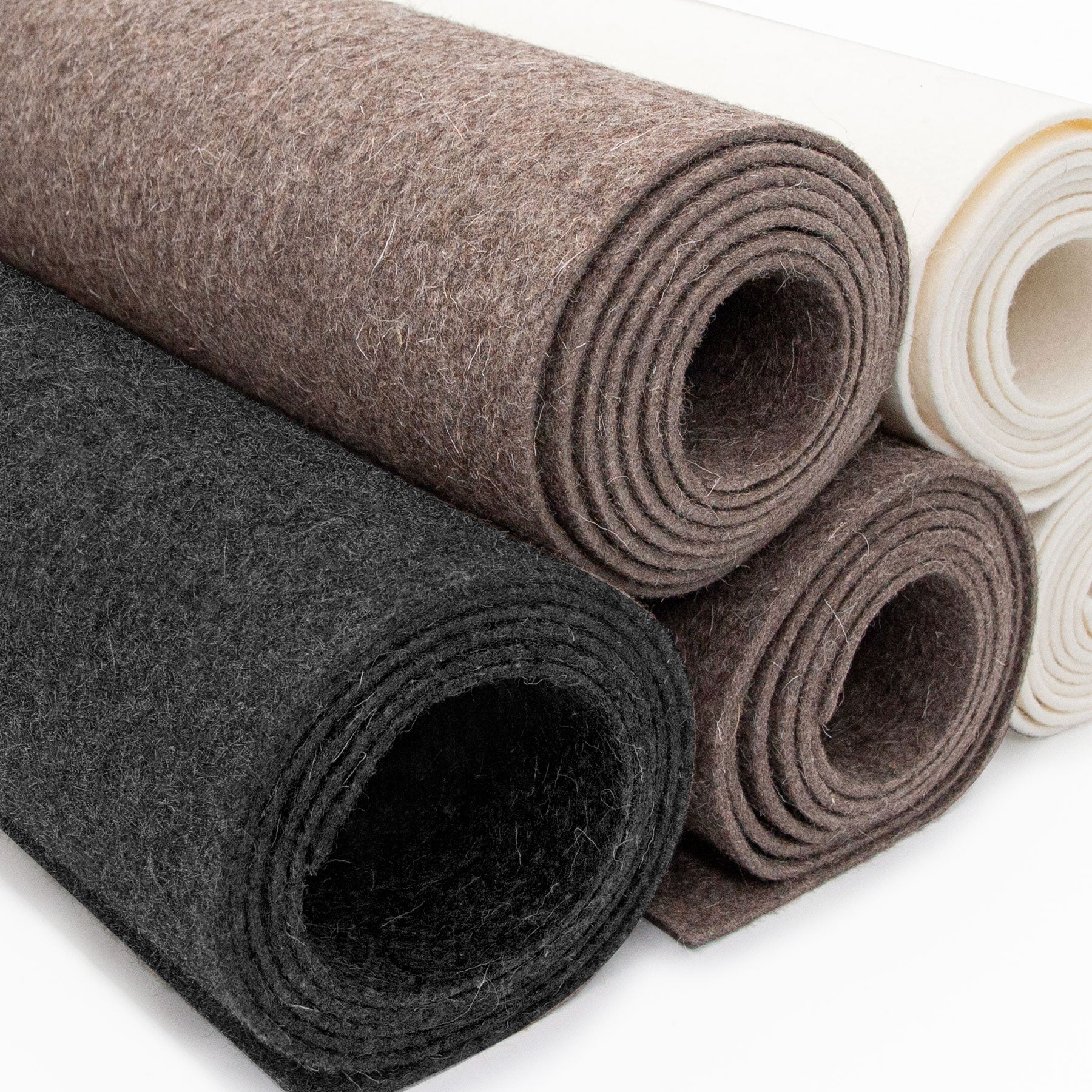


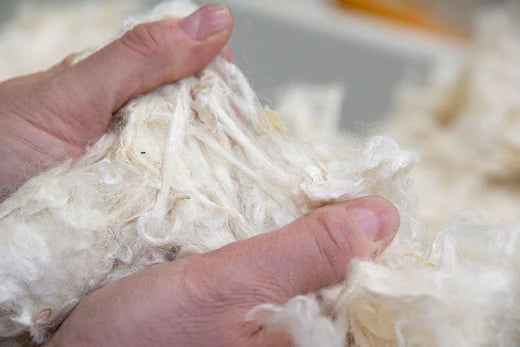
Wool felt is a material produced by felting wool . Wool felt is made from sheep's wool , sometimes blended with viscose depending on the quality.
Felting involves processing wool with water, heat, pressure, and mechanical movements to felt the wool fibers together and create a dense felt. Wool felt is a natural product made from sheep's wool , often from Merino sheep .
Wool felt has many properties that make it suitable for a wide variety of applications. Depending on the quality, it is dirt-repellent and flame-retardant . It has natural insulating properties , making it ideal for use in clothing , shoes , bags , and other accessories. Wool felt is also a popular material for making carpets , upholstery , and decorative items .
Wool felt comes in various thicknesses and colors. It can be decorated and processed using embroidery, appliqué, sewing, and other techniques. Wool felt is often considered an environmentally friendly alternative to synthetic materials because it is made from a renewable resource and is biodegradable .
Go directly to our wool felt range
General advantages of wool felt for technical applications
- biodegradable
- pure wool from sheep
- Smooth cut edges, without fraying
Leather felt - made from 100% wool or wool/viscose blends
Leather felt is a versatile material for various industrial applications.
It is used in the shoe and leather industry, furniture manufacturing, household appliances, office supplies, steel and rolling technology, as well as grinding and lapping technology.
Advantages of leather felt:
- A wide variety of densities are possible.
- A wide variety of thicknesses are possible
- Wool content varies
Saddle felt - made from wool/viscose blends
Saddle felt is generally less dense than leather felt, making it ideal for padding, seat cushions and other applications.
Advantages of saddle felt:
- Available undyed or dyed
- A wide variety of thicknesses are possible
- Wool content varies